
客戶喜愛的自動審核請求電子郵件
發送簡單、友好且清晰的自動審核電子郵件。建立信任,獲得更真實的反饋,並在不惹惱客戶的情況下提高銷量。
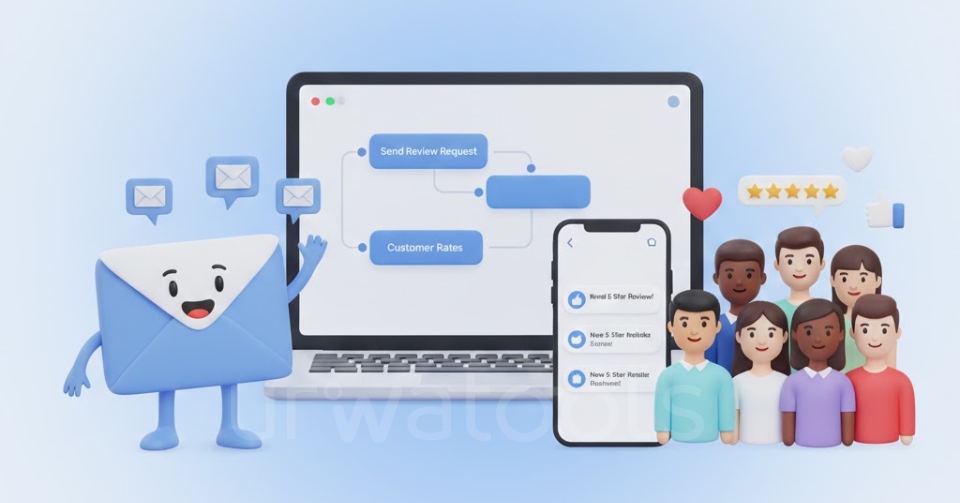
內容
Automated review request emails are the most reliable way to turn a stream of completed orders into a steady stream of published feedback. Set the trigger once, and every customer gets the same well-timed message instead of whichever handful you happened to remember to chase manually.
The catch is that most advice on this subject ignores the rules. Review platforms do not treat solicitation as a neutral marketing activity: Google permits asking but bans incentives, Yelp asks businesses not to solicit reviews at all, Amazon prohibits anything that resembles a paid or steered review, and Trustpilot forbids picking which customers you invite. On top of that, the emails themselves are regulated by CAN-SPAM in the United States and by the GDPR together with the ePrivacy rules in the EU and UK. Get the automation right and the compliance wrong, and you have built a machine that generates violations at scale.
This guide covers what each platform allows, what the FTC's fake-review rule changed in 2024, how to handle consent and opt-outs, and how to build a sequence that produces genuine reviews without putting your listings at risk.
What automation actually changes
Manual review requests fail for a boring reason: they are inconsistent. Staff ask the customers they enjoyed dealing with, on the days they are not busy, and quietly skip the orders that went badly. That is not just inefficient; it is the behaviour several platforms classify as review gating, because the sample you ask stops being representative.
Automation fixes both problems at once. A trigger tied to fulfilment or service completion asks everyone, on the same schedule, with the same wording, so the ratings you collect reflect the experiences you actually delivered. That matters more than founders expect: a flawless five-star profile reads as suspicious, while a strong average with a few honest three-star reviews reads as real.
What automation does not fix
An automated sequence sends the same request to a customer whose order arrived broken as to one who is delighted, so pair it with a support process that catches problems before the request goes out. Suppressing a review afterwards is prohibited; fixing the issue before you ask is simply good service.
Platform rules come first
Before you write a single line of email copy, work out which platform you are sending people to, because the rules differ sharply and the penalties land on your listing rather than your inbox.
Google's contributed-content policies permit merchants to solicit or encourage reviews that represent a genuine experience, provided you offer no incentives and make no attempt to influence the rating. The policy explicitly prohibits offering payment, discounts or free goods and services in exchange for positive reviews or the removal of negative ones, soliciting reviews from customers while they are on your premises, pressuring users to leave ratings, and asking staff to collect a set number of reviews or reviews with particular content. A neutral emailed request with no reward attached sits inside those rules. A tablet on the counter asking departing customers to rate you does not.
Yelp
Yelp is the outlier and the one most guides get wrong. Its guidance to business owners is unambiguous: do not ask anyone to review your business, including customers, mailing-list subscribers, friends and family. Yelp's software actively identifies reviews that look solicited and filters them out of your rating, so a review-request email pointed at Yelp can reduce the number of reviews that count rather than increase it. Yelp also warns against offering freebies, discounts or payment in exchange for reviews. If Yelp matters to your business, the compliant approach is to make it easy to find you there and let reviews arrive on their own.
Amazon
Amazon bans incentivised reviews outright. Offering a free product, a discount, a refund, a gift card, a payment or any promise of future compensation in exchange for a review breaches its policies and can cost you the listing or the selling account; the only sanctioned exception is Amazon Vine, which Amazon administers itself. Sellers also may not ask only satisfied customers, may not ask customers to change or remove a review, and may not use buyer-seller messaging to divert customers to an off-Amazon review destination. The safe mechanism is Amazon's Request a Review function in Seller Central, which sends a fixed, neutral, Amazon-templated message within a limited window after delivery and gives you no wording to customise, which is precisely why it is compliant.
Trustpilot and other invitation-based platforms
Trustpilot allows automated invitations but requires them to go out consistently rather than selectively; picking and choosing who gets invited, including inviting only people you expect to be happy, is prohibited. Incentives of any kind, including discounts, promo codes, prize-draw entries, refunds and freebies, are not allowed, and invitation copy must use fair, neutral, unbiased language, so "if you loved it, leave us five stars" breaches the rule. Platforms such as automated review request emails from Yotpo, along with Stamped and Klaviyo, supply the workflow plumbing that fires these invitations off fulfilment and delivery events.
Platform rules at a glance
| Platform | Emailed review requests | Incentives | Selective asking | Safest approach |
|---|---|---|---|---|
| Google Business Profile | Permitted | Prohibited | Prohibited | Neutral email after the visit; no on-premises solicitation |
| Yelp | Not permitted | Prohibited | Prohibited | Do not solicit; solicited reviews may be filtered out |
| Amazon | Only via Request a Review or compliant buyer-seller messaging | Prohibited except Amazon Vine | Prohibited | Use the Request a Review button on every eligible order |
| Trustpilot | Permitted | Prohibited | Prohibited | Invite every customer automatically with neutral copy |
| Your own website | Permitted | Allowed only with clear disclosure and no sentiment condition | Discouraged and misleading | Publish all reviews, disclose any incentive |
The FTC rule changed the stakes in 2024
In August 2024 the Federal Trade Commission announced a final rule on fake and deceptive reviews, which took effect that October. It matters because it converts several practices that were merely against platform policy into conduct that can attract civil penalties.
The rule prohibits fake or AI-generated reviews that misrepresent an actual experience, undisclosed reviews by company insiders, misrepresenting a site you control as an independent review source, buying fake engagement, and using threats or false accusations to suppress negative reviews. Most relevant to automated sequences, it prohibits compensation or incentives conditioned on a review expressing a particular sentiment, positive or negative.
Read that last clause carefully. An unconditional thank-you sent to every customer regardless of what they wrote is a different thing from a discount code that only arrives for five stars, and the second is exactly the pattern older "offer incentives" advice quietly recommends. If you are unsure about a specific programme, take legal advice; nothing here is legal advice.
Consent, CAN-SPAM and the GDPR
The platform rules govern the review. Separate law governs the email that asks for it.
CAN-SPAM in the United States
CAN-SPAM does not require prior consent to send commercial email, which surprises people who assume opt-in is universal. What it does require is a clear and conspicuous opt-out mechanism, honoured within ten business days and functional for at least thirty days after the message is sent; a valid physical postal address in the message; accurate header information identifying the sender; and a subject line that reflects the content rather than misleading the reader into opening it. Civil penalties apply per email and are adjusted annually for inflation, so a badly built automated sequence multiplies exposure by its own send volume.
A review request usually reads as commercial rather than purely transactional, since it promotes the brand as well as servicing the order. Treat it as commercial and include the opt-out and postal address, rather than betting on a favourable reading of the primary-purpose test.
GDPR and the ePrivacy rules in the EU and UK
Europe works the opposite way round. Under the ePrivacy rules, implemented in the UK as PECR, you must not send marketing email to individuals unless they have specifically consented, for example by ticking an opt-in box. Pre-ticked boxes and bundled consent do not count under the GDPR standard, which requires consent to be freely given, specific, informed and unambiguous.
There is one important exception, the soft opt-in. You may email existing customers who bought, or negotiated to buy, a similar product or service from you, provided you gave them a simple way to opt out both at the point you collected their details and in every message since. It does not cover prospects, bought-in lists, or non-commercial campaigns. Whichever basis you rely on, the GDPR still requires you to tell people how their data will be used, to honour objections and withdrawals promptly, and to keep records that demonstrate the basis you relied on.
A consent checklist that survives an audit
- Record the source, timestamp and exact wording of the opt-in or purchase that justifies each send.
- Keep the opt-out link in every message, and suppress unsubscribes across the whole sequence, not just the message they clicked.
- Include a real postal address, a recognisable sender name, and a plain statement of where the review will be published.
- Publish reviews under the name or initials the customer agreed to, never their full contact details, and never send to scraped or purchased addresses.
Building the sequence
With the rules settled, the mechanics are straightforward. Work through these in order.
- Pick the destination first. Decide which single platform each request points to, and confirm that platform allows solicitation at all. Splitting one email across three review sites reduces response on every one of them.
- Tie the trigger to a real event. Fire on delivery confirmation for physical goods and on service completion for everything else, not on order placement. A request that arrives before the product does is worse than no request.
- Insert a support gap. Leave time between delivery and the request for problems to surface and be resolved. This is not gating, because the request still goes to everyone; it just does not arrive mid-complaint.
- Clean the list before it sends. Run addresses through an email validator so invalid entries do not accumulate hard bounces and damage your sending reputation.
- Draft neutral copy. An email outreach template gives you a structure to adapt, and an AI email generator helps produce subject-line variants to test. Edit out anything that hints at a preferred rating.
- Tag the links so you can measure them. Build the review link with a UTM builder so review-page traffic is attributable in analytics rather than lumped in with direct visits.
- Add one follow-up, and only one. A single reminder several days later recovers a meaningful share of non-responders. A third message mostly generates unsubscribes.
- Give offline customers a route in. A code on the packing slip or receipt made with a QR code generator lets customers reach the review page later, which keeps you clear of Google's ban on soliciting reviews on the premises.
- Reply to what comes in. Answer negative reviews factually and publicly, and never threaten a reviewer or make false claims to get a review removed, both of which the FTC rule prohibits.
- Display them honestly on your site. Publish the bad with the good. If you mark reviews up with a schema markup generator, note that Google does not show review rich results where the entity controls reviews about itself, so self-serving LocalBusiness and Organization markup earns no stars in search.
Writing the email itself
Neutral does not mean lifeless. The strongest requests are short, name the specific purchase, explain why the review helps other buyers, and give one unmistakable link.
Subject lines
- "How did the [product name] work out?"
- "Two minutes to share your experience?"
- "Your feedback on order #1234"
Avoid anything that presumes the answer. "Loved your order? Tell us!" filters your respondents before they open the email, which is the gating pattern platforms watch for.
Body copy that earns a response
Thank the customer, name what they bought, say plainly that honest feedback helps other shoppers decide, and put a single call to action above the fold with a realistic time estimate. Then stop writing: every extra paragraph costs conversions.
Measuring the programme
Track delivery rate first, because nothing else matters if messages land in spam. Then open rate, click-through rate to the review page, and completion rate, the proportion of clicks that end in a published review. Completion rate exposes friction, usually review pages that demand an account, awkward mobile forms, or links that drop the customer on a homepage instead of the specific listing. At programme level, watch review volume per hundred orders and average rating over time; a sudden jump in average rating after a copy change is a warning sign, not a win, because it usually means the new wording is steering respondents.
Deliverability basics
Authenticate your sending domain with SPF, DKIM and DMARC, and send from a subdomain dedicated to this traffic so review requests do not inherit the reputation of your promotional campaigns. Warm new domains gradually, keep bounces low with regular list validation, and watch complaint rates: a spike usually means your timing or frequency is wrong, not your copy.
Mistakes that cost the most
- Offering a discount for a review. Prohibited by Google, Amazon and Trustpilot, and if it is conditioned on sentiment it also falls foul of the FTC rule.
- Surveying first and only asking happy customers to review. This is textbook review gating and is prohibited by the platforms that matter.
- Emailing customers to Yelp. Yelp asks businesses not to solicit at all, and solicited reviews are liable to be filtered out.
- Assuming US rules apply everywhere. A sequence built on CAN-SPAM assumptions and pointed at EU or UK customers will breach the consent rules there.
- Editing or hiding reviews. Suppressing negative feedback undermines the credibility you are trying to build and is squarely targeted by the FTC rule.
Frequently asked questions
Is it against the rules to ask customers for reviews by email?
It depends on the platform. Google permits neutral requests without incentives, and Trustpilot permits automated invitations sent to all customers. Yelp asks businesses not to solicit at all and filters reviews that look solicited. Amazon restricts you to its Request a Review function or compliant buyer-seller messaging. Check the destination policy before building the sequence.
Can I offer a discount or loyalty points for leaving a review?
No, not on the major platforms. Google, Amazon and Trustpilot all prohibit incentives, with Amazon Vine the only sanctioned exception. Separately, the FTC's 2024 rule prohibits compensation conditioned on a review expressing a particular sentiment. Older articles recommending incentives predate that rule.
Do I need consent before sending a review request email?
In the United States, CAN-SPAM does not require prior consent, but it does require a working opt-out, a physical postal address and accurate headers and subject lines. In the EU and UK you generally need specific consent, unless you can rely on the soft opt-in for existing customers who bought a similar product and were given an easy opt-out both at signup and in every message since.
When should the request go out?
After the customer has actually used what they bought, and after support has had a chance to resolve any problem. For physical goods that usually means a few days after delivery confirmation; for services, shortly after completion. Amazon's Request a Review function is only available within a limited window after delivery, so build timing around that constraint.
Is it review gating to send unhappy customers to support instead of a review page?
Yes, if a survey answer decides who gets asked for a public review. The compliant version sends the same request to everyone and runs support in parallel, so problems get fixed before the request lands rather than diverted away from the review page.
Will collecting reviews on my own site earn star ratings in Google search results?
Not for reviews about your own business. Google does not show review rich results where the entity being reviewed controls the reviews about itself, which rules out self-serving LocalBusiness and Organization markup. Product reviews on your product pages remain eligible.
Putting it together
A good automated review request programme is unglamorous: one trigger tied to a real event, one neutral email, one reminder, one clearly labelled link, and no incentives anywhere in the flow. The compliance work is front-loaded, and once it is done the sequence runs unattended.
Confirm what your destination platform permits, then write copy that would read as fair to a customer who had a mediocre experience. That single test catches most of the practices that get listings suppressed, and it produces the mix of honest ratings that persuades buyers far more effectively than an implausible wall of five stars.

The UrwaTools Editorial Team delivers clear, practical, and trustworthy content designed to help users solve problems efficiently. Our articles focus on accurac...